

















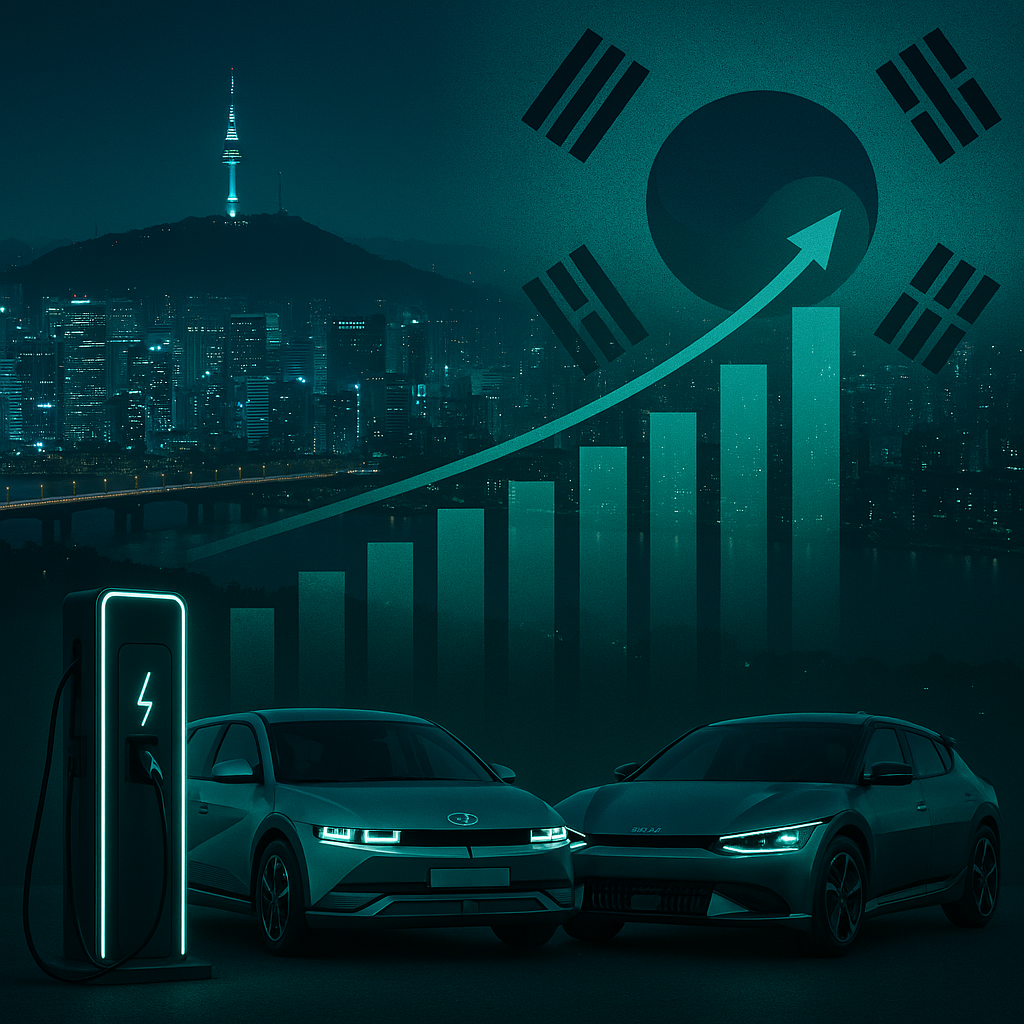
South Korea EV surge has captured 10% of total vehicle sales by 2021, according to IEA data, marking a dramatic shift in the automotive landscape. Government subsidies aim for 2.5 million EVs on roads by 2025 while Hyundai’s Ioniq 5 and Kia’s EV6 lead global recognition. Battery giants LG Chem and Samsung SDI target 600km range batteries, creating urgent demand for AI and EV tech talent.
The Rising Trend of EV in South Korea: A Game-Changer for the Automotive and Tech Industries
Estimated Reading Time: 6 minutes
- Significant growth: The share of electric vehicles in South Korea’s total vehicle sales reached approximately 10% in 2021.
- Government support: Substantial investments and incentives are accelerating EV adoption.
- Technological innovation: Major advancements in battery technology and AI integration are shaping the future.
Table of Contents
- Understanding the EV Landscape
- The Role of Major Players in the South Korean EV Market
- Innovations Driving EV Adoption
- Challenges to Overcome
- Practical Takeaways for Recruiters and HR Professionals
- Conclusion: The Future of EV in South Korea
- Call to Action
- FAQ
Understanding the EV Landscape
According to a report by the International Energy Agency (IEA), the share of electric vehicles in South Korea’s total vehicle sales reached approximately 10% in 2021, reflecting a significant increase from previous years. This surge is largely attributed to the government’s ambitious plans for EV adoption, aiming for 2.5 million electric vehicles on the roads by 2025, backed by considerable investments in infrastructure, such as charging stations and battery components.
Moreover, the South Korean government has announced incentives for consumers transitioning to electric vehicles, such as subsidies, tax exemptions, and reduced registration fees, incentivizing the market further. These governmental pushes not only accelerate EV adoption but also stimulate job creation within the sector, establishing South Korea as a hub for future mobility solutions.
The Role of Major Players in the South Korean EV Market
Prominent South Korean automakers, such as Hyundai and Kia, are at the forefront of this electrification wave. Hyundai has introduced a diverse range of electric models, including the Ioniq 5, while Kia’s EV6 has garnered recognition worldwide for its design and performance. These initiatives are further supported by strategic collaborations with tech industries focused on integrating artificial intelligence and advanced automation.
For instance, Hyundai partnered with companies specializing in AI technology to enhance vehicle performance and develop autonomous driving features, an initiative aligning with global trends in AI consulting and workflow automation. Such collaborations underline the fusion of automotive and technology sectors, propelling South Korea towards becoming a global leader in EV technology.
Innovations Driving EV Adoption
The EV transformation in South Korea doesn’t merely rest on vehicle production. Innovations in battery technology are pivotal, with South Korea investing heavily in research and development. Companies like LG Chem and Samsung SDI are trailblazers in battery manufacturing, producing high-capacity and long-lasting batteries integral for EVs. As per the latest data, LG Energy Solution aims to produce electric vehicle batteries with a range extending up to 600 kilometers on a single charge by 2025.
Furthermore, the development of vehicle-to-grid (V2G) technology is leading to exciting possibilities for energy management. V2G allows electric vehicles to return energy to the grid, presenting electric vehicles as not only a means of transport but also as dynamic energy resources. This kind of innovative thought is essential for leading players in the AI and automation sectors, bringing forth exciting prospects for recruitment as higher-skilled roles emerge in these areas.
Challenges to Overcome
Despite these promising trends, challenges remain for EV adoption in South Korea. One notable concern is the infrastructure for charging stations. While initiatives are underway, more extensive networks are necessary to ensure seamless EV operation across urban and rural areas. Currently, South Korea has around 37,000 charging stations, which, while substantial, is still insufficient for the projected number of EVs on the road.
Additionally, consumer perceptions about electric vehicle range and infrastructure are crucial. Misconceptions about performance—such as fears regarding range anxiety—may stall potential buyers. Comprehensive education and marketing approaches will be essential for convincing consumers of the benefits that EVs offer, which emphasizes the importance of strong communication strategies from companies involved in AI consulting, automating processes to develop efficient outreach methodologies.
Practical Takeaways for Recruiters and HR Professionals
As the electric vehicle market in South Korea advances, there are significant implications for recruitment and workforce development in related industries. Here are a few actionable insights for HR professionals and recruiters:
- Focus on Upskilling: As the automotive sector evolves towards greater electrification and automation, existing employees may require reskilling in new technologies. Identify training programs that enhance employees’ skills in areas like AI, data analysis, and electric vehicle technology.
- Leverage AI for Recruitment: Efficient recruitment workflows powered by AI can streamline candidate sourcing and screening. Implementing AI-driven tools can help identify candidates with hybrid skill sets—the ones who can adapt to both traditional automotive roles and newer EV-related positions.
- Highlight Green Workplace Policies: Attract environmentally conscious candidates by promoting your organization’s sustainability initiatives. Consider integrating electric vehicle-friendly policies, such as offering charging stations or EV subsidies for employees.
- Encourage Interdisciplinary Collaboration: As the automotive and tech sectors converge, companies should foster a culture of collaboration between traditional automotive teams and tech innovators. This can lead to more holistic approaches to product development.
- Be Proactive in Diversity: The EV market expansion opens avenues for varied skill sets and backgrounds. Focus on creating inclusive recruitment processes to attract talent from diverse fields beyond traditional automotive engineering.
Conclusion: The Future of EV in South Korea
The electrification of the automotive sector in South Korea offers tremendous opportunities for innovation, collaboration, and job creation. As consumer preferences shift and technology evolves, organizations involved in AI consulting and workflow automation are well-positioned to play an integral role in this transformation.
For businesses looking to navigate this landscape successfully, adapting to the rapid changes driven by EV trends is paramount. By leveraging the advancements in automation and AI, you can streamline processes, engage with employees effectively, and position your company as an industry leader.
Call to Action
To explore how our expertise in AI consulting and n8n workflows can help your organization adapt to the transformative changes in the automotive industry, we invite you to connect with our team. Whether you’re looking to automate recruitment processes, enhance workflow efficiencies, or implement cutting-edge technology solutions, we’re here to support your journey towards success in the electric vehicle market. Contact us today to learn more!
FAQ
Q: What are the main factors driving EV adoption in South Korea?
A: Key factors include government incentives, advancements in battery technology, and growing consumer awareness about sustainability.
Q: How are automakers like Hyundai and Kia contributing to the EV market?
A: They are introducing innovative electric models and forming partnerships with tech firms to enhance vehicle capabilities and performance.
Q: What are the major challenges facing EV infrastructure?
A: The limited number of charging stations and public misconceptions about EV performance and range anxiety are significant hurdles.
Q: How can HR professionals prepare for the growing EV sector?
A: By upskilling current employees, leveraging AI for recruitment, and fostering a diverse and inclusive workforce.